In a nutshell
- 🧪 The duo works through lactic acid (gentle AHA keratolytic and humectant) in cold cultured dairy plus oats’ avenanthramides and beta‑glucan for anti‑itch and barrier support; cooling adds redness‑reducing vasoconstriction.
- 🧴 Method: Mix 2 tbsp finely ground oats with 3–4 tbsp cold kefir/buttermilk/yoghurt; apply to damp bumps for 5–10 minutes, rinse lukewarm, then seal with a fragrance‑free moisturiser rich in ceramides or urea (5–10%); repeat 2–3 times weekly.
- 🫧 Target: For keratosis pilaris (“chicken skin”), lactic acid loosens keratin plugs while hydrating; oats form a breathable film to cut TEWL and calm itch, and the cold temp tempers redness.
- ⚠️ Safety: Avoid if dairy‑allergic, patch test 24 hours, skip broken skin or just‑shaved areas, alternate with retinoids/strong acids, and wear SPF; vegan option: oat milk + a few drops of cosmetic lactic acid as a rinse‑off mask.
- 🧭 Expectations: It’s a supportive home remedy, not a cure—use consistently and gently; seek professional advice for painful, inflamed, or rapidly spreading bumps, or consider higher‑strength lactic acid or urea 20% products.
Keratosis pilaris—often nicknamed “chicken skin”—is a stubborn sprinkling of rough, tiny bumps that can feel sandpapery on arms, thighs, and cheeks. A cupboard-friendly pairing of cold milk and oats is gaining attention for softening those dots while calming the itch and flush. The draw lies in lactic acid, oats’ anti‑inflammatory compounds, and the cooling effect that reins in redness. This is a gentle home remedy, not a cure, but it can complement a routine built on moisturisers and sunscreen. Think of it as a reset for texture and tone: a mild exfoliation, a sip of hydration for parched bumps, and a quieting of the urge to scratch.
Cold Milk and Oats: The Science of a Soothing Duo
Fresh milk contains only traces of free lactic acid, yet cultured options such as kefir, buttermilk, or live yoghurt deliver more of this alpha‑hydroxy acid known to loosen dead cells. Oats contribute avenanthramides—anti‑itch phenolics—and beta‑glucan, a film‑forming polysaccharide that helps skin hold water. Together, they create a light, milky slurry that softens plugs and settles the pink halo often seen with keratosis pilaris. Cold temperature adds a bonus: brief vasoconstriction that reduces heat, sting, and visible redness. The blend is pleasantly low‑tech, yet backed by sound dermatological principles: gentle exfoliation, barrier support, and inflammation control.
Don’t overlook texture. Finely ground oats bring a soft, physical buff without harsh grit, encouraging smoother feel without the micro‑tears coarse scrubs can cause. The dairy fats in milk offer emolliency, while its proteins help condition the surface. Used correctly, the mixture behaves like a mask and rinse—never an aggressive peel. For sensitive or paediatric skin, this matters. It aims for comfort over drama, making it an approachable option when retinoids or high‑strength acids are too much.
Why Keratosis Pilaris Responds to Lactic Acid
KP occurs when excess keratin collects in hair follicles, forming plugs that feel bumpy and look speckled. Lactic acid tackles two angles: it is a keratolytic, nudging stubborn bonds between dead cells, and a humectant that attracts water, plumping the outer layer so it feels less abrasive. This dual action is crucial for KP, where dryness worsens the roughness. Hydrate as you exfoliate, and the bumps soften without the collateral sting. In leave‑on lotions, lactic acid often sits around 5–12%. A kitchen mask won’t reach those strengths, but it can smooth texture enough to make sleeves and tights more comfortable.
There’s also a barrier story. KP skin tends to be drier and reactive. Oat beta‑glucan forms a breathable film that slows water loss, while avenanthramides quiet the urge to scratch—important, because picking and friction inflame follicles. Cooling the area limits neurogenic itch pathways for a short window. When you lower inflammation, KP looks better even before plugs shift. Consistency counts: gentle nudges, repeated 2–3 times weekly, usually yield more progress than a once‑a‑fortnight blitz.
How to Mix and Apply the Treatment
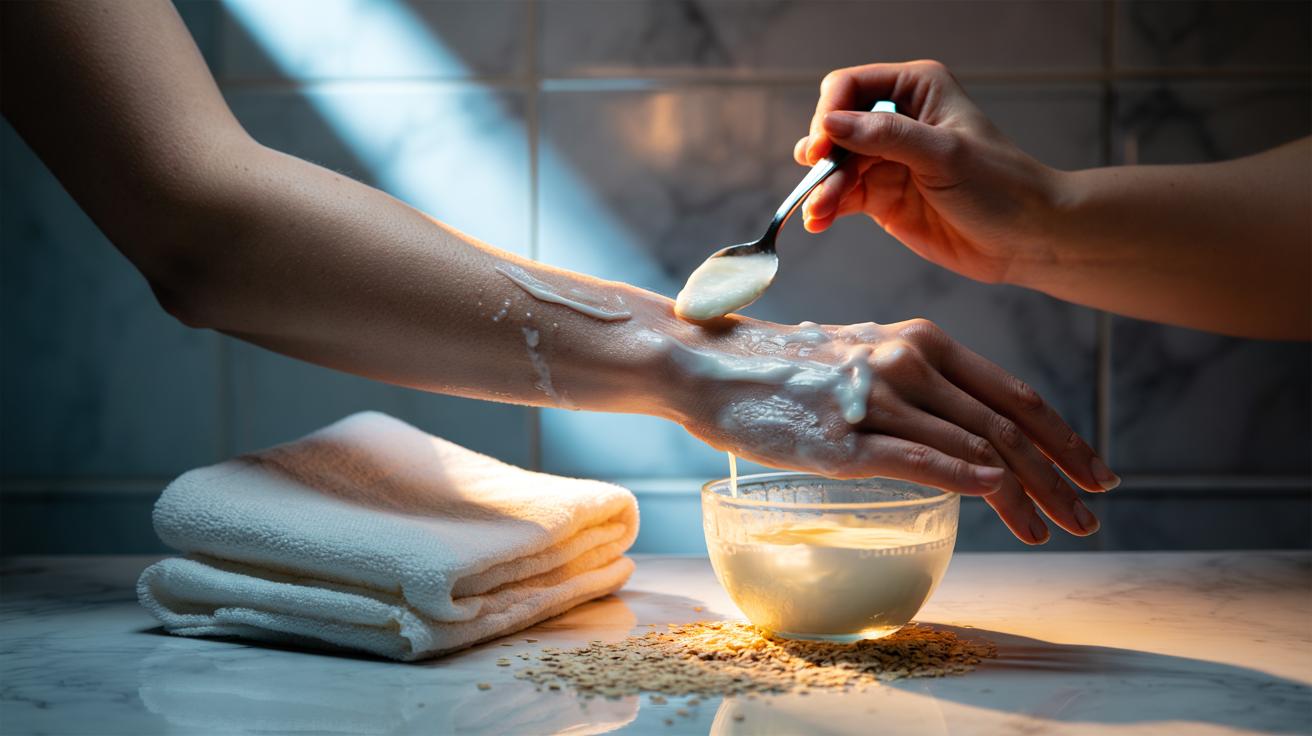
Use a cultured dairy for more lactic acid: cold kefir, buttermilk, or natural yoghurt. Blitz 2 tablespoons of finely ground oats (colloidal if possible) with 3–4 tablespoons of cold dairy to form a pourable paste. On clean, slightly damp skin, spread a thin layer over bumpy areas. Leave for 5–10 minutes, keeping it cool with a chilled flannel if you’re flushed. Rinse with lukewarm water, pat dry, then seal with a fragrance‑free moisturiser rich in ceramides or urea (5–10%). Short contact, frequent repetition wins over long soaks that can irritate.
Frequency depends on tolerance. Start twice weekly, edging to three times if skin stays calm. Sensitive types may prefer half‑and‑half dairy and water. For vegans or dairy‑allergic users, swap to oat milk with a few drops of a cosmetic lactic acid serum mixed in as a rinse‑off mask. Always patch test on the inner arm for 24 hours before treating broader areas. If stinging surpasses a brief tingle, rinse immediately and moisturise generously.
| Component | Role | Key Actives | Notes |
|---|---|---|---|
| Cultured dairy (kefir/buttermilk/yoghurt) | Keratolytic and humectant | Lactic acid, lipids, proteins | Keep cold for anti‑redness benefit |
| Finely ground oats | Anti‑itch and barrier support | Avenanthramides, beta‑glucan | Use colloidal oats for smooth texture |
| Ceramide moisturiser (aftercare) | Barrier repair | Ceramides, cholesterol, fatty acids | Apply within 3 minutes post‑rinse |
Safety, Variations, and When to See a Professional
Do not use if you have a dairy allergy. Lactose intolerance is a digestive issue, but topical allergy is different—err on the side of caution. Avoid broken skin, recent shaving, or active eczema flares. Pair the routine with daily SPF on exposed areas; AHAs can increase sun sensitivity. If you’re on prescription retinoids or using strong acids, alternate days to prevent over‑exfoliation. Fragrance‑free products reduce the risk of contact dermatitis around already irritable follicles.
Stubborn KP sometimes needs clinic‑grade options: urea 20% creams, higher‑strength lactic acid lotions, or in‑office modalities. Seek advice if bumps become painful, inflamed, or extend rapidly, which could signal folliculitis or another diagnosis. For body care in winter, consider a shower filter, a soft washcloth instead of a scrub, and heavier emollients. Consistency and barrier‑first thinking usually outpace any single “miracle” product. The milk‑oat mask earns its place as a calm, cost‑effective adjunct rather than an all‑in fix.
Cold milk with oats is humble, but the logic is solid: a trace of lactic acid to coax away roughness, oat actives to soothe, and a chill that quiets the blush. Done regularly and followed with a robust moisturiser, it can take “chicken skin” from prickly to politely smooth without the drama of peels. Remember: patch test, keep contact time short, and listen to your skin’s feedback. If you try it for a fortnight, what changes do you notice in texture, redness, and comfort—and how might you tweak the mix to suit your own skin?
Did you like it?4.5/5 (21)