In a nutshell
- ❄️ Cold reduces rosacea flush by triggering vasoconstriction and easing nerve activity (e.g., TRPV1/TRPA1), best used in short, gliding cooling cycles to avoid rebound redness.
- 🌼 German chamomile adds anti-inflammatory support via apigenin, alpha-bisabolol, and chamazulene; choose plain, caffeine-free tea and avoid essential oils; patch-test if sensitive to Asteraceae.
- 🧊 Method: steep 2 bags in 250 ml for 8–10 minutes, freeze, then wrap the cube in thin cloth; glide 30–45 seconds per area, rest, repeat up to 3 cycles; finish with a bland moisturiser (e.g., ceramides, squalane).
- ⚠️ Safety first: never apply bare ice; stop with numbness, sharp sting, hives, or blotchy whitening; apply prescriptions like azelaic acid after skin returns to normal temperature.
- 🧴 Role in care: offers fast, low-cost relief but doesn’t replace clinical treatment; combine with trigger management, daily sunscreen, and dermatologist guidance for steadier, less reactive skin.
Rosacea flare-ups can appear fast: crimson cheeks, prickling heat, and lingering sensitivity. A simple kitchen remedy — chamomile ice — is gaining fans for the way it seems to shrink a flush within minutes. The science is clear enough: cold tempers overactive vessels while chamomile’s actives soothe the skin’s barrier. Used correctly, this duo offers a low-cost adjunct to clinical care. Brief, buffered cooling calms redness without shocking the skin. Below, we explore how temperature changes regulate blood flow, why chamomile adds comfort, and how to use cubes safely so you get relief from the heat without risking irritation or rebound.
Why Cold Works on Rosacea
Rosacea is a neurovascular condition marked by vasodilation, increased blood flow, and nerve hypersensitivity that amplify facial colour. Cooling drives short-term vasoconstriction, which narrows surface vessels and reduces the flush. It also dampens activity in heat-sensing channels such as TRPV1 and TRPA1, curbing stinging and burning. In practice, that means the right kind of cold can de-escalate a flare by interrupting the cascade that turns warmth into widespread erythema. Applied in cycles, cold reduces redness and sensory discomfort without overwhelming the skin, making it a practical first-aid step for reactive faces.
Technique matters. Avoid dramatic temperature shocks that can provoke rebound redness once the skin warms. Instead, use short, gliding passes that cool the cheeks and nose, then pause to let the skin re-equilibrate. Never grind a cube into the skin or hold it stationary. Stop immediately if you feel numbness, sharp sting, or blotchy whitening. This approach respects the fragile vessels and helps the skin maintain its barrier function, reducing the risk of flare-ups that can follow aggressive cooling or prolonged contact.
Chamomile’s Soothing Chemistry
Cold tackles the vascular side of a flush; chamomile complements it with anti-inflammatory action. German chamomile (Matricaria recutita) contains apigenin, alpha-bisabolol, and traces of chamazulene, compounds associated with reduced redness and improved comfort. These actives help settle the cytokine chatter that fuels irritation and can make a hot face feel tight or itchy. In a cold compress, the herb’s calming chemistry arrives with the added benefit of cooling, a one-two approach that often shortens recovery time after a trigger like heat or spicy food.
The format also matters. Tea-based cubes deliver a dilute, skin-friendly solution without fragrance or alcohol. Choose plain, caffeine-free German chamomile and avoid essential oils on inflamed skin. For those with plant sensitivities, be mindful that chamomile sits in the Asteraceae family; if you react to ragweed or daisies, patch-test first. When tolerated, the combination of gentle cooling and botanical actives can reduce tingling and blunt the bright pink surge that defines a classic rosacea flush.
How to Make and Use Chamomile Ice Safely
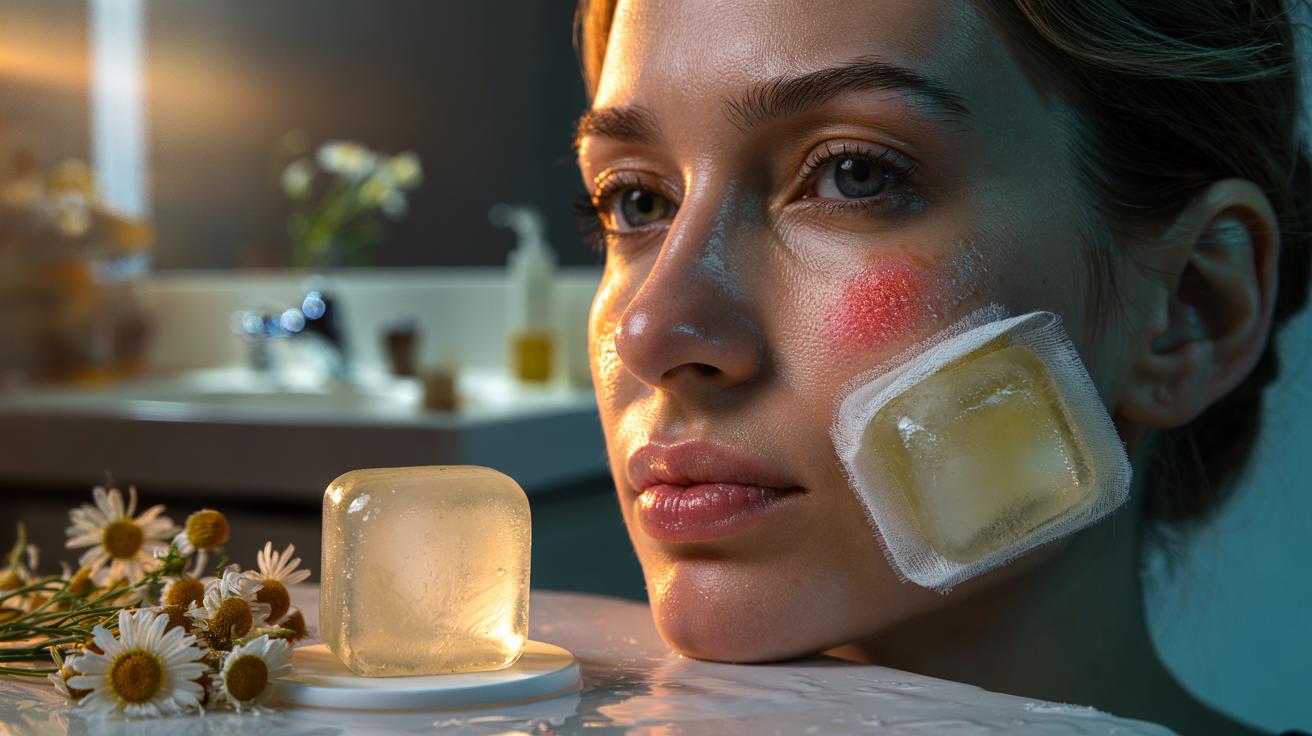
Steep two bags of German chamomile in 250 ml boiling water for 8–10 minutes, then cool fully. Pour into a silicone tray and freeze. To use, wrap a cube in a thin, damp cloth or gauze. Glide over cheeks, nose, and chin for 30–45 seconds per zone, then rest for a minute. Repeat up to three cycles. Do not apply bare ice directly to the skin. Finish with a bland moisturiser rich in ceramides or squalane to lock in hydration and support the barrier. Limit sessions to once daily during flares and three to four times weekly for maintenance.
Integrate this method into your routine on clean skin, ideally before sunscreen in the morning or after cleansing at night. If using prescription rosacea treatments, apply them after the skin returns to normal temperature. Watch for warning signs: intense stinging, hives, or swelling suggest sensitivity to cold or the herb. Discontinue and seek advice if redness worsens or persists. Used with care, chamomile ice can complement therapies like azelaic acid or brimonidine without adding fragrance or heavy actives that might sting.
| Guideline | Recommendation |
|---|---|
| Steeping | 2 tea bags, 8–10 minutes in 250 ml water |
| Contact time per area | 30–45 seconds, gliding, never stationary |
| Total session | Up to 5 minutes in cycles |
| Frequency | As needed for flares; 3–4 times weekly for upkeep |
| Stop if | Numbness, hives, sharp sting, or blotchy whitening appears |
Chamomile ice will not replace clinical care for persistent rosacea, but it earns a place as fast-acting relief when heat rises. The cooling narrows vessels, the herb quiets irritation, and the ritual helps you control a flare before it spirals. Pair it with trigger management, sunscreen, and dermatologist-guided treatment for the best odds of steadier skin. Consistency and gentle handling are more effective than dramatic interventions. Where does this method fit into your routine, and how might you tailor contact time, frequency, or cube strength to match your personal pattern of redness?
Did you like it?4.3/5 (23)